Table Of Content

Therefore, dogs and cats use their whiskers as an aid to seeing in the dark. On a scientific level, you can’t find a difference between hair and fur. To answer the hair vs. fur debate, you need to look at the types of hair, growth pattern, purpose, and texture. These nuances not only elucidate the biology of fur-bearing and hairy organisms but also illuminate the remarkable diversity of life on Earth.
Categories
Human hair generally have the same texture, while animal hair tends to include a double composition. In animals, the core of the hair follicle has thermal regulating properties. It allows the coating of their hair to supply insulation from heat and cold.
What Is Human Hair?
Diffzy is a one-stop platform for finding differences between similar terms, quantities, services, products, technologies, and objects in one place. Our platform features differences and comparisons, which are well-researched, unbiased, and free to access. All King Kanine products are manufactured in facilities compliant with applicable federal, state, and local regulations. All King Kalm products are produced with 100% hemp-derived CBD for dogs in an ISO 9 and ISO certifiied facility. No statement by King Kanine has been evaluated by the FDA, nor is intended to diagnose, treat, or prevent any symptoms or conditions. Please consult a veterinarian prior to using any of our products.
What’s the Difference Between Hair and Fur?
Hair is structured into three parts- the medulla, cuticle, and cortex. Hair growth and hair bulb are nourished by hormones from the blood vessel’s hair bulb. The fossil record even shows evidence of hair used for protection and warmth. Straight or curly hair, short or long, each hair texture and length demands a unique approach to care.
Guard hairs are longer, generally coarser, and have nearly straight shafts that protrude through the layer of softer down hair. The distal end of the guard hair is the visible layer of most mammal coats. This layer has the most marked pigmentation and gloss, manifesting as coat markings that are adapted for camouflage or display. Guard hair repels water and blocks sunlight, protecting the undercoat and skin in wet or aquatic habitats, and from the sun's ultraviolet radiation.

Guard hairs can also reduce the severity of cuts or scratches to the skin. Many mammals, such as the domestic dog and cat, have a pilomotor reflex that raises their guard hairs as part of a threat display when agitated. Mammals are animals that bear live young and produce milk to feed their young. While the terms hair and fur are used when referring to this trait in humans and animals respectively, the basic structure is the same for all mammals.
The murder case of James Anagnos was solved through a human hair match, while the homicide of Elizabeth Ballard was solved by the forensic analysis of animal hair. In the realm of temperature regulation, fur acts as a superb insulator for animals. Dogs and cats boast a coat that adjusts with the season, thicker during the cold months for warmth and thinner when it’s warmer. Bears, for example, grow a dense layer of fur to combat the frigid conditions in their habitats. The fur’s growth cycle is usually synchronized to shed at specific times of the year, while human hair growth is less uniform. It also varies widely in texture, color, and density across different individuals and body parts.
The Difference Between Dog Fur and Dog Hair
There are broadly two types of hair, guard hair, and ground hair. If a mammal has only one of these (ground hair), they are said to have hair. If a mammal has both guard and ground hair, it is said to have fur.
Similarities Between Human and Animal Hair
The smooth cuticle of human hair when analyzed under a microscope. Diving into the world of hair and fur, one finds a complex interplay of biology and function. Considering that mammals are so reliant on their fur, it's no wonder that they also work hard to keep it in good condition.
Down hair (also known as underfur, undercoat, underhair or ground hair) is the bottom – or inner – layer, composed of wavy or curly hairs with no straight portions or sharp points. Down hairs, which are also flat, tend to be the shortest and most numerous in the coat. Thermoregulation is the principal function of the down hair, which insulates a layer of dry air next to the skin. Hair evidence found at the scene of a crime can yield important clues for investigators. Both human and animal hair have helped to solve some of our nation's toughest cases.
These are the hairs that usually determine the basic color of the cat. To complicate things further, breeders often describe the overall appearance of a cat's fur as its coat. You will see this term used almost exclusively in breed standards, but you will also see "hair" mentioned, as in "longhair" or "shorthair" breeds or divisions. Regular brushing and grooming is important for dogs with hair or fur to prevent matting and clumping—though maybe not by someone with allergies.
The thick sheath of hair covering the skins of various animals, specifically mammals, is known as fur. Oily guard hair is found as a layer on the fur, and a thick underfur below the fur. There are several breeds of hairless cats, perhaps the most commonly known being the Sphynx cat.
Big hair? Bald? How much difference your hair really makes to keep you cool or warm - The Conversation Indonesia
Big hair? Bald? How much difference your hair really makes to keep you cool or warm.
Posted: Wed, 14 Jun 2023 07:00:00 GMT [source]
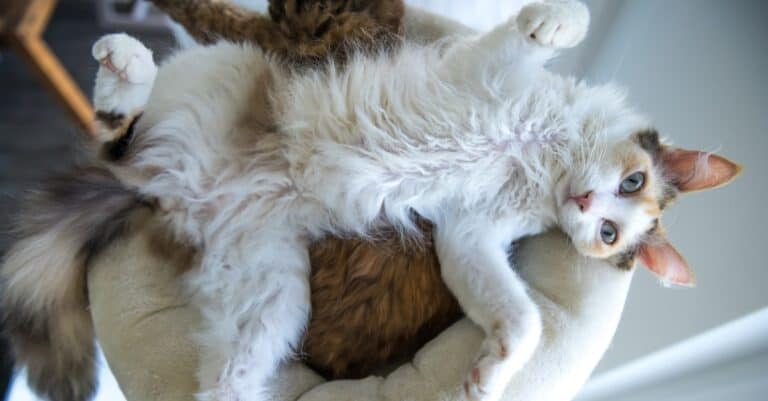
These structures, while similar in function, are not identical. To understand the differences, we must explore their composition, roles in nature and the human impact on these materials. Each of these organs is covered with protective layers that guard them against injury and bacteria. The skin is a protective covering of the body and, at the same time, it acts as a sensory organ. When it comes to cats, the terms hair and fur are often used interchangeably to the point where it can get confusing.
However, there are differences in the types of hair or fur found on different parts of the body or in different animals. The coarse and sparse strands growing from the skin of mammals such as pigs and elephants is also called hair. Furthermore, we also use the word hair to refer to few strands of fur (hair of animals).


No comments:
Post a Comment